Home / Cat breeds / Cornish Rex
Cornish Rex breed guide
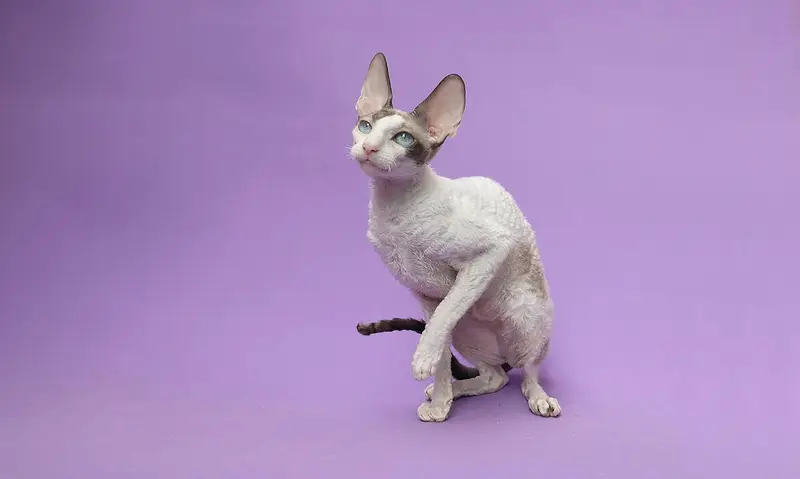
CFA pictures the Cornish Rex as a greyhound's lean elegance paired with a clown's playfulness, wrapped in tight marcel waves.
The coat has no guard hairs and the breed standard gives it 40 points for density and softness as well as curl.
- Coat length
- Shorthair
- CFA personality
- Active, racy, affectionate
Cornish Rex temperament
Devoted to their people, Cornish Rex earn the nickname Velcro kitty from their need for physical contact with a favorite person. Their antics amuse children and adults alike and dogs find them ready playmates.
Adaptable and adventurous, they also love to travel.
Cornish Rex personality
Exuberant and always searching for something new to play with, the breed calls for a child-proofed house and fragile objects behind closed doors. When not after attention, affection or play, a Cornish Rex is probably looking for food: enormous appetites live in slim bodies and some eat vegetables and fruit.
They converse but do not vocalize loudly.
Cornish Rex care
Regular combing is not needed. CFA says to clean the ears often with a cotton ball or Q-tip because wax builds up faster than in other breeds.
A greasy coat calls for an occasional shampoo and a thorough towel dry and a blow dryer would ruin the curls.
Cornish Rex health
CFA describes a sturdy, vigorous breed with no inherited health issues. The coat is fragile and may not shield enough from the sun, so cats can get sunburned. They chill easily in cold weather, so CFA suggests a sweater.
Cornish Rex history
The coat mutation began in Cornwall, England in 1950, when a curly-coated cream male kitten named Kallibunker turned up in a litter of barn cats on Nina Ennismore's farm. She bred him back to his mother, producing two more curly kittens and borrowed the name Rex from her Rex rabbits.
Crosses with Burmese, Siamese and British Shorthairs showed the mutation is recessive. CFA accepted the breed for registration in 1962. It reached championship status two years later.
More cat breed guides
Sources
Photos via Wikimedia Commons: Cornish Rex by Alexandre Gonçalves, CC BY-SA 4.0
