Home / Cat breeds / Korat
Korat breed guide
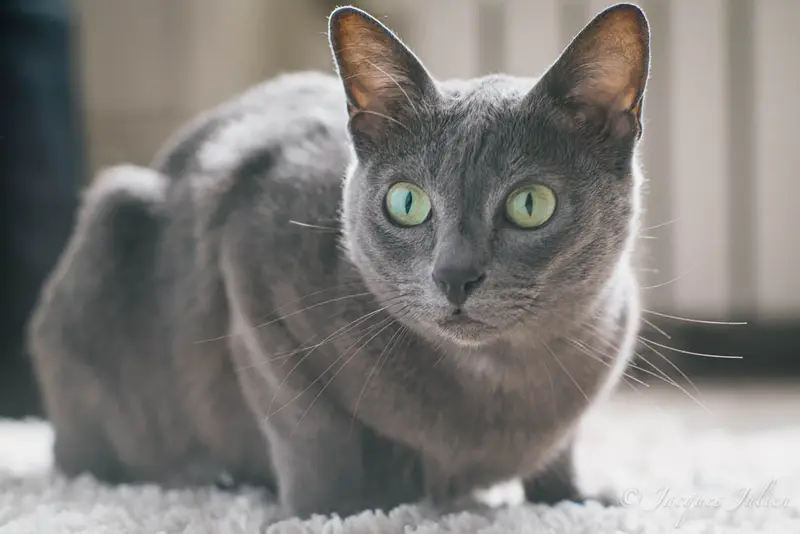
CFA traces the Korat to Thailand's Korat province and a history dating to the 1300s, with a silver-tipped blue coat, peridot green eyes and a heart-shaped head.
The earliest known record is the Cat-Book of Poems, which illustrates 17 good luck cats of Thailand, the Korat being the best known.
- Coat length
- Shorthair
- Time to maturity
- Two to four years
- Mature male weight
- 10 pounds or more
Korat temperament
Korats demand attention and consider themselves head of the family. They bond strongly with owners, seek contact and take a keen interest in every activity. They are energetic but not hyperactive.
When a new pet arrives, CFA says to keep a significant focus on the Korat so its head-of-the-family role stays unchallenged, which should prevent jealousy.
Korat personality
Extremely intelligent, the Korat can learn tricks, but only with its consent. It craves stimulation, so interactive toys, puzzle toys and games keep it challenged.
Korats make a wide range of noises and are not afraid to speak up when they want your attention.
Korat care
Korats need little grooming: the shiny single coat sheds only lightly. Weekly brushing keeps it in good condition and builds the bond with the owner. Nails, teeth and ears need regular attention.
Korat health
CFA calls Korats a natural breed that is relatively healthy and says most breeders commit to managing the health of their breeding cats.
Korat history
The Korat was first discovered in Amour Pimai, part of Korat province. Thais traditionally gave these cats to brides as harbingers of luck and happiness.
Jean Johnson imported the first two Korats into the United States in 1959. Ten years later Daphne Negus returned from Thailand with nine more to strengthen US bloodlines and became a vital part of the breed's history.
More cat breed guides
Sources
Photos via Wikimedia Commons: Korat by Jacques Julien Photo, CC BY-SA 4.0
