Home / Cat breeds / Ocicat
Ocicat breed guide
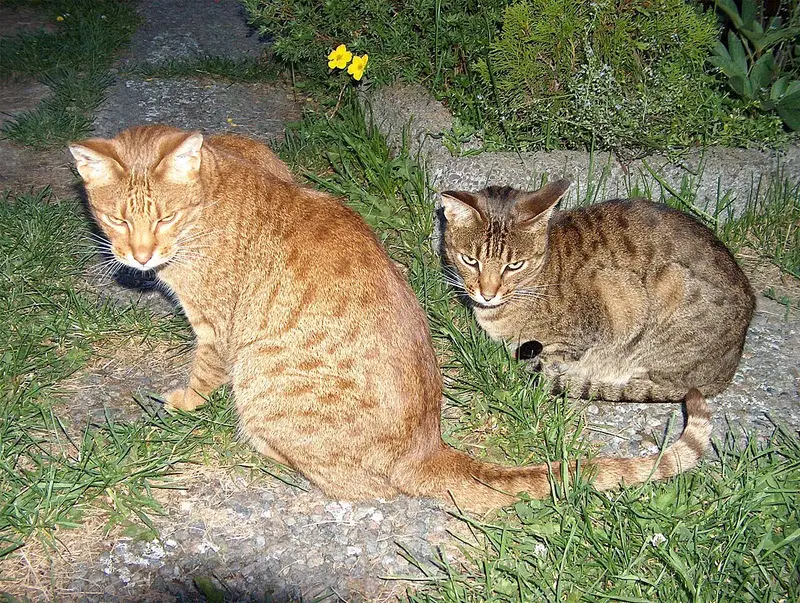
CFA calls the Ocicat a 100% domestic hybrid of three popular breeds, designed to look like the spotted wildcats of Central and South America.
The first Ocicat, Tonga, was born in 1964 from an attempt to cross an Abyssinian with a Siamese to get Abyssinian-pointed Siamese.
- Coat length
- Shorthair
- CFA personality
- Strong, active and social
- Coat colors
- 12
Ocicat temperament
Dedicated to their owners but neither clingy nor demanding, Ocicats are natural extroverts who welcome strangers, probably hoping for new playmates.
They do best with other animals around or someone who works from home, because they dislike long periods alone.
Ocicat personality
Often described as dog-like, many Ocicats fetch, walk on a leash and learn voice commands. They travel well. CFA calls them energetic but not overly active, with a base activity level below an Abyssinian's or a Siamese's.
They vocalize now and then to get attention without being annoying about it.
Ocicat care
Ocicats shed lightly and need minimal grooming. A rubber brush occasionally removes dead hair. For very light shedders a chamois wipe removes loose hair, lightly cleans and adds luster as often as needed.
Bathing is for show cats.
Ocicat health
Three parent breeds give the Ocicat genetic diversity and hybrid vigor. Breeders share genetic testing information. Hypertrophic cardiomyopathy and amyloidosis, which can affect the kidneys or the liver, may still turn up from the parent breeds.
Progressive retinal atrophy, a heritable cause of blindness, is a minor concern now that genetic testing can manage it.
Ocicat history
The breeder's daughter thought Tonga looked like an ocelot, which gave the breed its name. Tonga was neutered and placed in a pet home, but his picture in a Detroit newspaper caught the eye of geneticist Dr. Clyde Keeler, who wanted to produce domestic cats that mimic vanishing wild species.
Breeders repeated the cross and added an American Shorthair to broaden the genetic base. CFA first accepted the Ocicat for registration in 1966, but consistent structure and type took time and championship status came in 1987.
More cat breed guides
Sources
Photos via Wikimedia Commons: Ocicat by ToB, CC BY-SA 3.0
