Home / Cat breeds / Russian Blue
Russian Blue breed guide
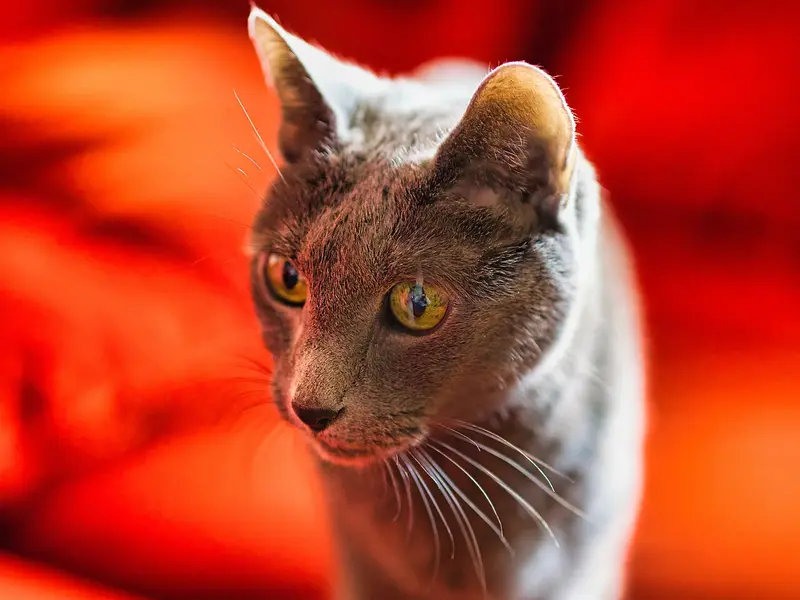
CFA calls the Russian Blue one of the cleverest of all cat breeds, with a silvery-grey short coat, emerald-green eyes and a face that appears to smile at a secret joke.
It does not need a lot of space to feel content.
- Coat length
- Shorthair
- CFA personality
- Graceful, playful and quiet
- Male weight
- Rarely over 10 pounds
- Female weight
- 5 to 8 pounds
Russian Blue temperament
Russians may look shy at first and often hide under the sofa when a guest arrives, but natural curiosity soon draws them out to investigate. Very sensitive to their owners' moods, they clown around to cheer you up or offer gentle purrs and head butts to a crying child.
CFA calls them good pets for older children, who let the cat take its time. Best suited to quieter environments, many thrive in noisier households and make friends with other animals.
Russian Blue personality
Mechanical aptitude tops the list: closed cabinets, shut drawers and sealed jars are tempting challenges, so expect an unexpectedly open door. CFA advises puzzle toys and interactive games to redirect that mind.
Russians also seek out a lap or ride through the house on your shoulder.
Russian Blue care
Russian Blues are clean cats that need very little grooming: combing two or three times a month controls shedding and the claws need trimming and the eyes and ears need cleaning. An oily or greasy coat may benefit from a bath.
Russian Blue health
CFA calls it a healthy natural breed with no known specific genetic problems, though some believe the relatively small gene pool may raise susceptibility to certain diseases. Large appetites and too little interactive exercise put it at risk of obesity, so monitor food intake.
Russian Blue history
Believed to have originated in the Archangel Isles in northern Russia, Russians have little written history before the late 1800s. Russian folklore calls them good-luck charms and healers and other stories make them pets of Russian royalty and of two English queens.
Sailors probably brought them to England, where early shows called them Archangel Cats and judged them with all the other solid blue cats. Scandinavian breeders led development from the early 20th century to World War II and after the war US breeders combined English and Scandinavian bloodlines into today's Russian Blue.
More cat breed guides
Sources
Photos via Wikimedia Commons: Russian Blue by Andrzej Barabasz, CC BY-SA 4.0
