Home / Cat breeds / Turkish Angora
Turkish Angora breed guide
CFA calls the Turkish Angora a national treasure in Turkey and the oldest known longhair breed, most likely an ancestor of other longhairs.
Owners advise that if you cannot find your Turk, look up: the tallest cabinet in the house is the likely spot.
- Coat length
- Longhair
- CFA personality
- Busy, curious
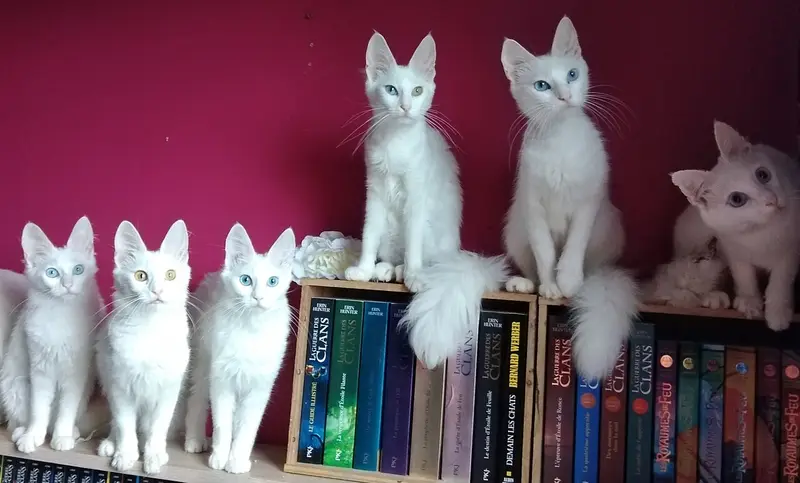
Turkish Angora temperament
CFA says Turkish Angoras are among the most interactive and affectionate of all breeds, wanting to be your constant companions and determined assistants. Independent enough to stay home while people are at work or school, they wait at the door to share the details of their day.
Their loving natures and tolerance of frequent physical contact make them excellent pets for young children.
Turkish Angora personality
Intelligence varies: some are so bright that owners call them Einsteins, while others sometimes forget where the food dish is. Often called doglike, Turkish Angoras will chase a laser light up a vertical wall as if defying gravity.
Turkish Angora care
The single coat is not prone to matting, which makes the breed one of the easiest longhairs to care for. Combing two or three times a month should control shedding in younger cats and older cats may need it more often.
If bathing is necessary it tends to go well because Turkish Angoras have a natural affinity for water: dripping faucets fascinate them and some have joined their owners in the shower.
Turkish Angora health
Turkish Angoras are not known for specific health problems, but white cats are prone to deafness, especially blue-eyed ones. White cats should be bred to colored cats to reduce the chance of a deaf kitten and in some parts of the world white kittens must pass a BAER hearing test.
Turkish Angora history
Written history goes back to the 1600s, when the cats were brought to Europe from the Middle East. They are believed to have been among Marie Antoinette's pets in France. In England they were interbred so closely with Persians that the breed virtually disappeared, so the Turkish government set up preservation breeding programs at zoos in the 1930s and counted only white cats as authentic.
The first Turkish Angoras reached the United States in 1954, when the breed was considered all white. Today they appear in nearly every color except chocolate, lilac and the pointed pattern, which are not eligible for registration.
More cat breed guides
Sources
Photos via Wikimedia Commons: Turkish Angora by Vinydeluz, CC BY-SA 4.0
