Home / Cat breeds / Chartreux
Chartreux breed guide
A legend says Chartreux lived in French monasteries and took the monks' vow of silence. CFA calls that a charming myth but agrees the breed is quieter than most, with a calm, cheerful dignity.
Blue is the only color and the woolly coat is somewhat water-resistant over an insulating undercoat.
- Coat length
- Shorthair
- CFA personality
- Even-tempered and adaptable
- Time to maturity
- Three to five years
- Mature male weight
- Up to 14 pounds
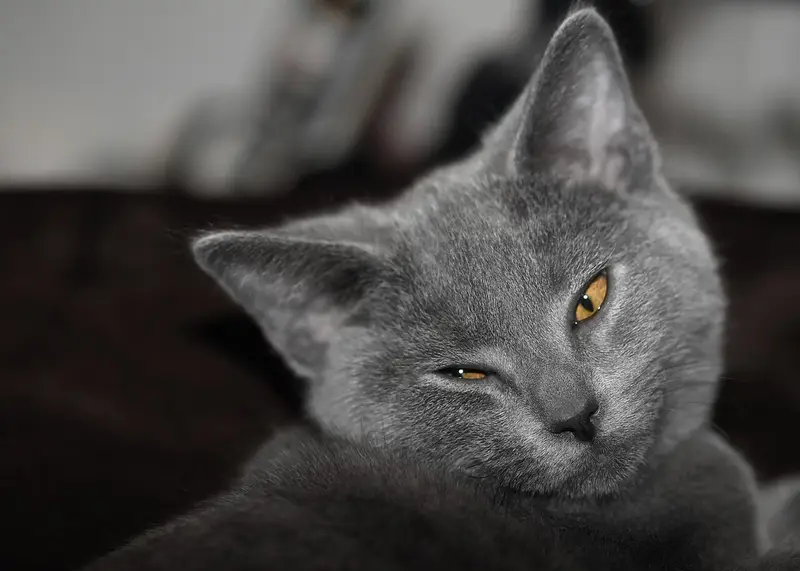
Chartreux temperament
Even-tempered and adaptable, Chartreux form close, affectionate bonds yet stay polite and undemanding. CFA says they are creatures of habit who build rituals with their families and follow owners from room to room.
Treated with kindness and patience, these gentle cats repay it with loyal affection.
Chartreux personality
Reflexes are lightning-fast and the dog-like behavior includes walks on a leash, retrieving toys and answering to their names. Many have a tiny voice used rarely and others are mute, but murmurs, chirps, expressive eyes and body language get the message across.
A paw touch asks for a lap and a toy delivered to you asks for play.
Chartreux care
Chartreux shed seasonally and need more grooming in fall and spring. Occasional combing with a wide-spaced metal comb stops mats and hairballs.
Most need no regular bathing. CFA warns that wetting the water-resistant coat all the way through is a challenge. CFA does not recommend the breed for allergy sufferers because of the abundant woolly undercoat.
Chartreux health
Weight gain troubles some mature Chartreux, though the body should always feel solid and muscular. Patellar luxation, a heritable condition that affects mobility, has been seen and a vet can screen kittens and cats; those with mild cases are unlikely to develop mobility issues but should not be bred.
US breeders keep the gene pool diverse by exchanging cats with breeders worldwide.
Chartreux history
References to the blue cats of France appear in literature as early as the 16th century. The name was once thought to come from Carthusian monks but may stem from a Spanish wool that traders knew well.
Selective breeding began in France in the 1920s from natural colonies of blue cats and Chartreux were first imported to North America in 1970. Breeders follow the French custom of naming every kitten born in a year with one letter, using only 20 letters and leaving out K, Q, W, X, Y and Z.
More cat breed guides
Sources
Photos via Wikimedia Commons: Chartreux by Stephanemartin, CC BY-SA 3.0
