Home / Cat breeds / Exotic
Exotic breed guide
CFA built the Exotic around the Persian look with a plush coat of medium length that stands off the body, giving a fluffy teddy bear impression.
CFA still classes it as a longhair because it is structurally identical to the Persian, with the longer-coat challenge removed.
- Coat length
- Longhair and Shorthair
- CFA personality
- Sweet, affectionate, quiet
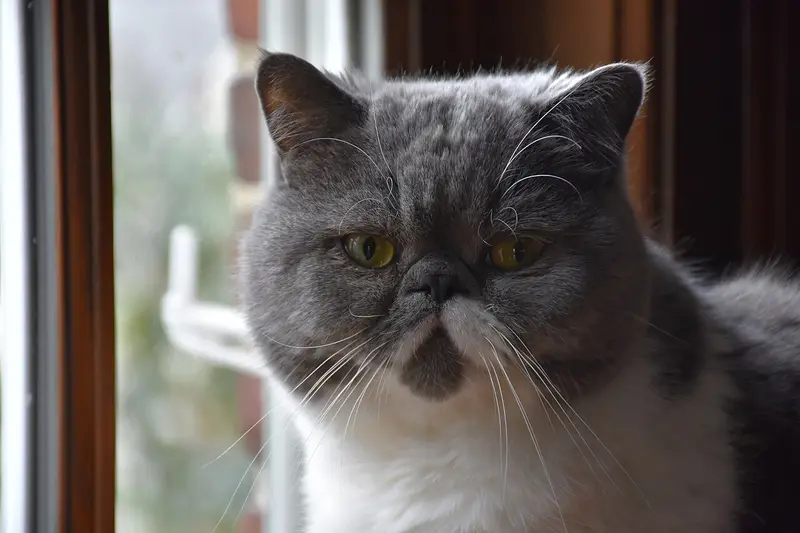
Exotic temperament
Quiet and loyal, the Exotic stays close without needing to join every activity. Easygoing, it fits into a new home at any age. CFA calls it an excellent pet for young children.
It may be shy with other animals at first but soon learns to coexist peacefully with dogs and other cats.
Exotic personality
Exotics were bred back to Persians after the original cross, so personality and intelligence now match the Persian's. Some consider the Exotic a bit more active and playful, perhaps because it never had to learn to sit still for lengthy grooming.
It speaks with its large eyes more than its voice and meows are rare.
Exotic care
The Exotic sheds more than the Persian, mostly by season, so it needs regular grooming and bathing, though CFA calls the time commitment not burdensome. A steel or Teflon-coated comb manages shedding, a weekly combing covers most of the year and a bath may be needed in shedding season to remove accumulated undercoat.
Mats are uncommon but may occur in a neglected coat and Persian heritage makes Exotics patient with grooming and bathing.
Exotic health
Even with a large gene pool, CFA calls genetic screening of paramount importance for cats used in breeding and says most breeders are diligent about it.
Exotic history
In the 1950s several West Coast Persian breeders crossed their cats with American Shorthairs. Short hair is dominant over long, so the litters held shorthaired kittens with the Persian's round head, round eyes and cobby body.
Controversial at first, they proved so popular that CFA established them as a breed in 1966. So many were shaded silver or chinchilla, colors that no shorthair breed had at the time, that the name became Exotic Shorthair; the word Shorthair caused confusion and was dropped.
More cat breed guides
Sources
Photos via Wikimedia Commons: Exotic by Dmitry Brant, CC BY-SA 4.0
