Home / Cat breeds / Havana Brown
Havana Brown breed guide
Breeders call Havana Browns Brownies after the helpful household spirit of Scottish folklore, which CFA says suits the breed's people-oriented, helpful nature.
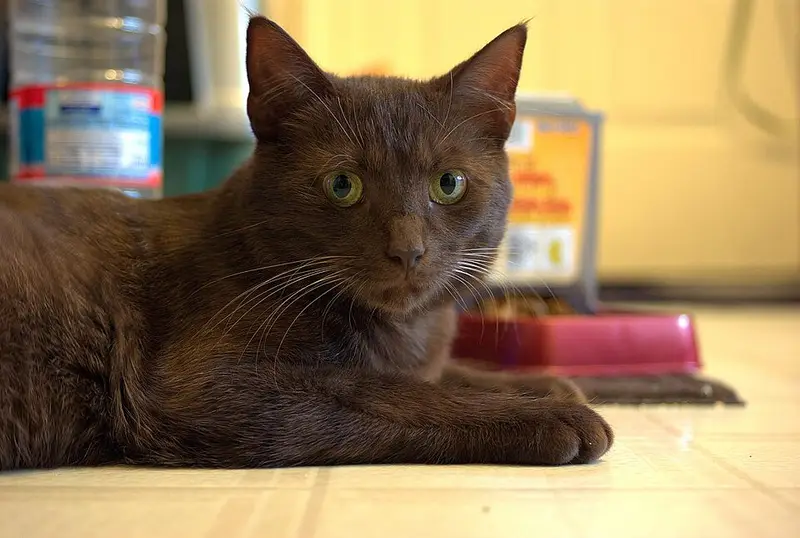
Mahogany brown coat, brown whiskers, green oval eyes and a head shape often described as a corncob stuck into an orange set the breed apart.
- Coat length
- Shorthair
- CFA personality
- Busy, affectionate
Havana Brown temperament
Moderately active and playful, Havana Browns are compatible with other family pets and sleeping in a tangled pile with another cat or even a dog is the breed's idea of heaven. CFA says that is one reason to consider two Havana Browns. It notes that breeders recommend a female over a male when only one is kept.
Havana Brown personality
Curious and inquisitive without being intrusive, a Havana Brown waits and watches for you to open the cupboard instead of finding its own way in. Paws carry the affection: it touches you with a friendly paw or uses one to investigate something new.
Personalities vary. Some Havana Browns are shy and devote themselves to one family member and others are outgoing and want to be everybody's best buddy.
Havana Brown care
The short silky coat is not prone to heavy shedding and could not be easier to groom. CFA suggests a soft boar-bristle brush daily and a soft rubber brush rubdown two or three times a month, finished by buffing with a chamois cloth or silk scarf for gloss.
Regular bathing is not usually needed unless the cat is shown.
Havana Brown health
A dedicated group of breeders is working to widen the gene pool and in 2019 CFA put a regulated outcrossing program in place. It allows pure Havana Browns to be bred to certain colors of Oriental Shorthair, seal or chocolate point Siamese and unregistered black or blue domestic shorthairs and offspring that meet the standard after being bred back to pure Havana Browns may be registered.
Genetic testing of all breeding cats has become essential under the program.
Havana Brown history
Solid brown cats of Siamese type existed in the United Kingdom and Europe in the late 1800s but fell from favor as the pointed, blue-eyed Siamese rose. After World War II English fanciers crossed Siamese with black domestic shorthairs to produce a self-brown cat and some early crosses went to the United States.
CFA accepted the Havana Brown for registration in 1959. It achieved championship status in 1964.
More cat breed guides
Sources
Photos via Wikimedia Commons: Havana Brown by Dave Scelfo from Point Pleasant Beach, NJ, USA, CC BY-SA 2.0
