Home / Cat breeds / Sphynx
Sphynx breed guide
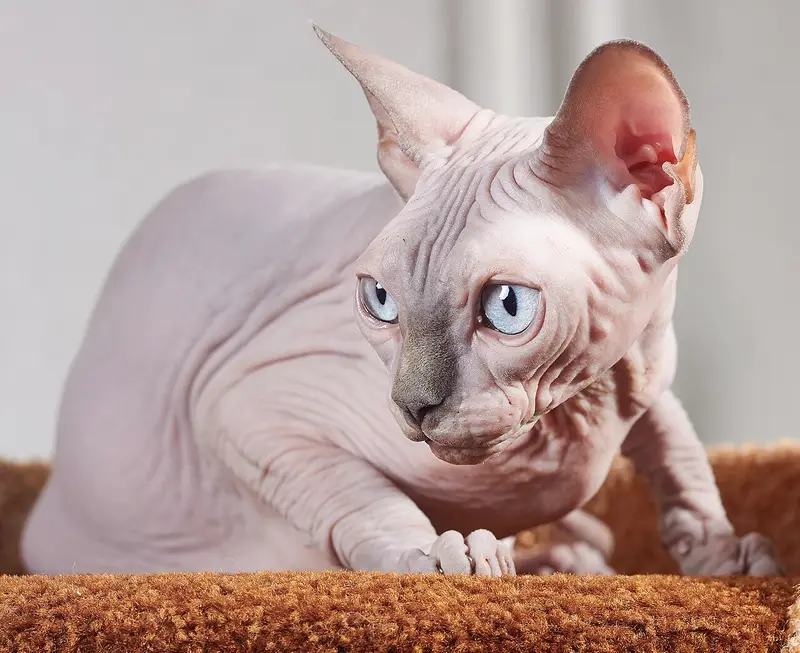
CFA says fans of the Sphynx cite its otherworldly look, with lemon-shaped eyes, oversized ears and a full abdomen or the feel of nearly bare skin, often compared to warm suede.
The breed is not always totally hairless: some short hair is usually present on the nose, ears and tail.
- Coat length
- Shorthair
- CFA personality
- Active, affectionate
Sphynx temperament
Curious, outgoing and anything but shy, a Sphynx follows you from room to room keeping up a steady chatter. Those who respond to its neediness get devoted companionship that is hard to duplicate.
As body heat magnets, Sphynx spend hours glued to your side, which makes them popular with children old enough to understand that the skin is delicate and unsuited to rough play.
Sphynx personality
Not necessarily loud but not quiet either, the Sphynx states its needs clearly. Those needs usually revolve around attention or food. It thrives on the company of other cats, especially other Sphynx. It does not do well alone for long, so CFA suggests considering a pair.
Sphynx care
The very oily skin requires regular bathing. Skin texture and the degree of hairlessness vary from cat to cat. Seasonal and hormonal changes may also affect hair development.
Sphynx health
CFA calls the Sphynx a very robust breed but lists breed-specific issues: respiratory problems in kittens because of the lack of hair, hypertrophic cardiomyopathy, a hereditary myopathy that affects muscle function and sensitive digestive systems. Urticaria pigmentosa and periodontal disease also occur.
Testing for conditions such as hypertrophic cardiomyopathy helps keep the gene pool healthy and diverse.
Sphynx history
A domestic cat in Toronto gave birth to a hairless kitten in 1966, a natural recessive mutation. Over 30 years, outcrossing to normal-coated cats and then back to hairless cats built a breed on a diverse gene pool with hybrid vigor. CFA says the Sphynx can claim to be the first Canadian cat breed.
Two American-born cats with the same mutation, Epidermis and Dermis, appeared in Minnesota in 1975 and were bred to American Shorthairs and Devon Rex. CFA accepted Sphynx for registration in 1998 and advanced them to championship in 2002.
More cat breed guides
Sources
Photos via Wikimedia Commons: Sphynx by Dmitry Makeev, CC BY-SA 4.0
